


Xiaoli H
The tech for cleaning is amazing. I have dry mouth and sensitive teeth. The tech made the process comfortable and easy. No pain at all.
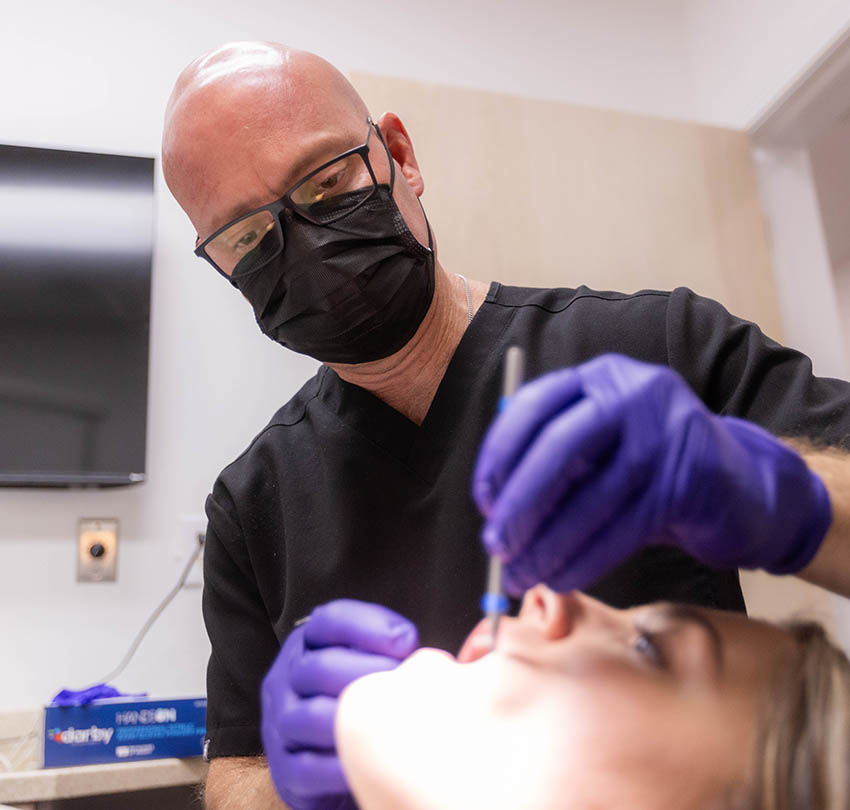
Guided Biofilm Therapy (GBT) is a modern, non-invasive dental cleaning method that uses disclosing agents, warm water, air, and fine erythritol powder to remove biofilm from your teeth and gums. Built as a systematic, evidence-based protocol, GBT targets biofilm as the root cause of decay and gum disease, offering a gentler alternative to traditional scaling and polishing.
GBT fits naturally within a biological dentistry philosophy because it works in harmony with your body. Instead of aggressive scraping, the technique finds the exact areas where bacteria are hiding and clears them away with precision. The result is a cleaner mouth, healthier gums, and a more comfortable visit for you.
GBT follows a five-step protocol that removes biofilm efficiently while protecting your natural tooth structure and dental work. Each step builds on the last, giving your hygienist a clear picture of where bacteria live and how to clean them safely.
Here’s what you can expect during your visit:
The whole process usually feels lighter than a traditional cleaning. Many patients describe it as refreshing rather than tense.
GBT delivers three standout advantages: greater comfort thanks to less scraping, better enamel preservation from its low-abrasive powder, and safer cleaning around implants and other dental work. Because it targets biofilm directly, the cleaning tends to be both gentler and more thorough than older methods.
Comfort is one of the first things patients notice. Less scraping means less sensitivity during and after your visit, so patients with anxiety or sensitive teeth often prefer GBT. On the enamel side, the erythritol powder is fine and low-abrasive, which keeps your natural tooth structure intact. That approach supports biomimetic dentistry and its focus on protecting what nature gave you.
A few more benefits round out the picture:
Implants, veneers, crowns, and orthodontic brackets are all safe with GBT. The technique was designed specifically to protect restorations, using a fine powder spray and specialized nozzles rather than tools that can scratch or wear down dental work. That care matters, because scratched surfaces attract more bacteria over time. Keeping restorations smooth and intact helps them last longer and keeps the surrounding tissue healthy.
Both traditional cleanings and GBT can leave your mouth healthy. The difference lies in how they get there. Traditional cleanings rely on hand scaling and polishing paste applied to every tooth surface. GBT uses disclosing agents to guide the cleaning and air-powder technology to remove biofilm with more precision.
Here’s a side-by-side look:
| Feature | Traditional Cleaning | Guided Biofilm Therapy |
|---|---|---|
| Technique | Hand scaling and polishing paste | Disclosure-guided air-powder and ultrasonic technology |
| Comfort level | Some scraping and pressure | Gentler, less scraping |
| Enamel preservation | Standard polishing can be abrasive | Low-abrasive erythritol powder |
| Stain removal | Effective on surface stains | Effective on surface and interproximal stains |
| Safe around implants | Requires extra care | Designed to be implant-safe |
| Biofilm targeting | Visual estimation | Disclosing agent maps biofilm precisely |
| Post-visit sensitivity | Common | Less frequent |
Both approaches work well. GBT is generally the gentler and more precise option, which is why so many hygiene programs have made it a core part of their care.
The cost of Guided Biofilm Therapy (GBT) varies based on a few things. Your gum health matters. So does the amount of buildup present. Whether you have implants or deep pockets that need extra attention also plays a role. In many cases, GBT is comparable to a standard cleaning, though it may run slightly higher because of the specialized equipment and materials involved.
Factors that can affect your cost:
For a personalized estimate, it helps to ask your dental team directly. They can walk you through pricing, insurance benefits, and financing options so you can plan with confidence and no surprises.
Most adults benefit from GBT, and it’s especially helpful for people who have struggled with traditional cleanings in the past. Because the technique is gentle and precise, it works well for a wide range of oral health needs.
You may be a great candidate if you:
If you’re not sure whether GBT is right for you, a biological dentist can evaluate your teeth and gums during your next appointment and recommend the best path forward. A short conversation about your history and goals usually clears up any questions and points you toward the care that fits you best.
Most patients benefit from GBT cleanings every 3 to 6 months, depending on your oral health and any conditions like gum disease or implants. Your dental team can recommend a schedule that fits your needs during your visit and adjust it over time as your health changes.
Yes, and in many cases it’s more thorough. Because GBT uses a disclosing agent to reveal hidden biofilm, your hygienist can clean exactly where bacteria are living. That precision often results in a deeper clean than traditional methods, especially in tight spots between teeth.
No, most patients find GBT more comfortable than a traditional cleaning. The warm water, fine powder, and gentle ultrasonic vibrations replace the heavy scraping and pressure of older techniques. If you’ve avoided cleanings due to sensitivity, GBT may change how you feel about them entirely.
Yes, GBT is specifically designed to be implant-safe. The PERIOFLOW nozzle and erythritol powder clean around implants without damaging the surface or surrounding tissue, which helps prevent peri-implantitis and keeps your investment healthy for years.
Yes, GBT effectively removes stains from coffee, tea, red wine, and tobacco. The air-powder spray reaches between teeth and along the gumline where stains often build up. Many patients see a noticeably brighter smile, often after a single visit, and enjoy a fresher feel that helps them look, feel, and live better between appointments.