

Xiaoli H
The tech for cleaning is amazing. I have dry mouth and sensitive teeth. The tech made the process comfortable and easy. No pain at all.
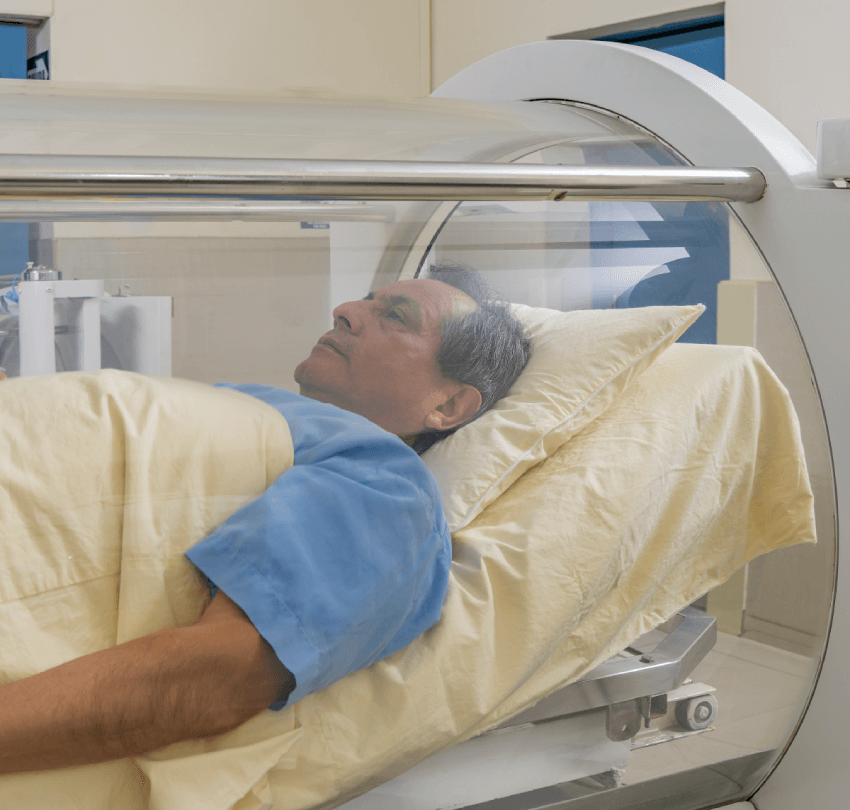
Hyperbaric oxygen therapy (HBOT) is a medical treatment where you breathe pure oxygen inside a pressurized chamber, allowing your blood and tissues to absorb significantly more oxygen than normal. This increased oxygen delivery speeds up healing after dental procedures like implants, extractions, and bone grafts by reducing inflammation, fighting infection, and stimulating new tissue growth. At Biodental in Pensacola, we offer HBOT as part of our whole-body health focus.
The therapy started as a treatment for decompression sickness in divers. Today, it’s an FDA-approved medical treatment with expanding applications in dentistry. When your tissues receive concentrated oxygen, your body’s natural repair processes work more efficiently. This makes HBOT particularly valuable for patients recovering from oral surgery or those with conditions that slow healing.
Here’s the short version. During an HBOT session, you enter a sealed chamber pressurized to 1.5 to 3 times normal atmospheric pressure. Pure oxygen dissolves directly into your blood plasma at that pressure, reaching tissues with poor blood flow. Those are the exact areas that struggle to heal after dental surgery. Sessions last 60 to 90 minutes.
Now the details. At this pressure, pure oxygen dissolves directly into your blood plasma. This means oxygen can reach tissues that have poor blood flow, exactly the areas that struggle to heal after dental surgery.
The increased oxygen triggers several healing responses in your body:
Sessions typically last 60 to 90 minutes. You’ll relax inside the chamber while breathing normally. Most treatment plans include multiple sessions to achieve full benefit. Some patients read, listen to music, or simply rest during their time in the chamber.
Your body keeps benefiting from the oxygen boost even after you leave the chamber. The effects build over time. That’s why consistent sessions produce the best results.
Hyperbaric oxygen therapy offers specific advantages for dental recovery that traditional methods can’t match. When you increase oxygen delivery to healing tissues, everything works better. Pensacola patients pursuing implants, grafts, and gum care often see meaningful gains from adding HBOT to their care plan.
Patients undergoing dental implants, extractions, and bone grafts often experience quicker healing times. The extra oxygen supports the complex cellular processes needed to integrate implants with bone and regenerate tissue.
Post-surgical swelling, soreness, and infection risk all decrease when tissues receive adequate oxygen. Your immune system functions more effectively in an oxygen-rich environment.
Patients with osteonecrosis (bone death) or radiation damage to the jaw often struggle to heal. In these challenging cases, HBOT can make the difference between successful treatment and ongoing complications. For periodontal treatments, healthy oxygen levels also support the delicate process of gum tissue repair and reattachment.
Dental implants need strong bone to anchor properly. HBOT boosts bone oxygenation, creating better conditions for osseointegration. And if you have diabetes, smoke, or live with other conditions that affect healing, HBOT can help make up for your body’s reduced repair capacity. These benefits matter for many Pensacola patients who come to us with complex medical histories.
| Factor | Traditional Methods | HBOT |
|---|---|---|
| Approach | Manages symptoms (pain, infection) | Addresses root cause (oxygen delivery) |
| Infection Control | Antibiotics kill bacteria | Oxygen creates hostile environment for anaerobic bacteria |
| Swelling Reduction | Ice packs, medication | Cellular-level inflammation reduction |
| Healing Speed | Standard recovery timeline | Accelerated tissue repair |
| Invasiveness | Varies by treatment | Non-invasive |
| Side Effects | Medication-related risks | Minimal (ear pressure, temporary vision changes) |
Traditional post-operative care, including antibiotics, cold therapy, and rest, focuses on managing symptoms while your body heals at its natural pace. HBOT works differently by giving your body the resources it needs to heal faster.
That said, HBOT works best as a complement to conventional care, not a replacement. You’ll still follow your post-surgical instructions and take prescribed medications. HBOT simply adds another layer of support.
Clinical experience suggests faster recovery timelines when HBOT is added to standard protocols. The therapy is non-invasive with minimal side effects, making it a low-risk addition to your treatment plan.
Hyperbaric oxygen therapy session costs vary widely, with many practices charging in the range of $100 to $300 per session and total treatment ranging from 5 to 20 sessions. Actual pricing depends on the type of chamber, the facility, and your specific treatment plan.
Hard-shell chambers, which reach higher pressures and deliver more oxygen, generally cost more than soft-shell (mild) chambers. Hard-shell chambers are typically used for dental healing applications because they achieve therapeutic pressure levels.
Depending on your procedure and health status, you may need several sessions across a few weeks. Package pricing often reduces the per-session cost.
Most dental insurance plans don’t cover HBOT, though some medical insurance may cover it for specific diagnoses. Flexible spending accounts (FSA) and health savings accounts (HSA) often apply. Our team can help you understand your options.
Many integrative practices, including Biodental in Pensacola, offer package pricing that makes multiple sessions more affordable. We’ll walk you through the numbers during your consultation so there are no surprises.
HBOT can benefit many dental patients, but it’s particularly valuable for certain situations.
You may be a strong candidate if you’re:
Contraindications to discuss with your provider:
A consultation is required before starting HBOT. Dr. Campus, who trained at the McCracken Implant Education Center and is a member of the International Academy of Biological Dentistry and Medicine, will review your health history, current medications, and treatment goals with our team to determine if HBOT is right for you. This individual assessment ensures Pensacola patients receive appropriate care.
Yes. HBOT is safe when administered by trained professionals in a properly maintained facility. The most common side effects are temporary ear pressure (similar to what you feel during airplane descent) and occasional mild vision changes that resolve after treatment ends. Serious complications are rare.
Most dental applications require multiple sessions across several weeks, depending on your specific procedure and health status. Simple extractions might need fewer sessions, while complex cases like bone grafts or implants in compromised bone may benefit from more. At Biodental in Pensacola, your provider will recommend a treatment plan based on your situation.
No, HBOT is painless. You may feel pressure in your ears during pressurization, similar to what happens when flying or driving through mountains. Simple techniques like swallowing or yawning relieve this pressure. Most patients find sessions relaxing.
Yes, HBOT often works well alongside other biological therapies. Platelet-rich fibrin (PRF) and ozone therapy each support healing through different mechanisms. Combining these treatments can improve overall results. At Biodental in Pensacola, we can design an integrated protocol suited to your needs.
Starting within 24 to 72 hours after surgery typically produces the best results. Beginning treatment early takes advantage of your body’s initial healing response. However, HBOT can still provide benefits even if started later in the recovery process.
Yes. Research has explored HBOT benefits for implant integration, bone graft success, and healing in patients with compromised circulation. Continued investigation expands our understanding of optimal protocols for dental applications.
Ready to learn how hyperbaric oxygen therapy can support your dental healing? Biodental combines HBOT with other advanced therapies to help Pensacola patients heal faster and more completely. Dr. Christopher M. Campus, trained at the McCracken Implant Education Center and a member of the International Academy of Biological Dentistry and Medicine, brings a whole-body health focus to your dental care. Schedule a consultation to discuss whether HBOT is right for your treatment plan.