

Xiaoli H
The tech for cleaning is amazing. I have dry mouth and sensitive teeth. The tech made the process comfortable and easy. No pain at all.
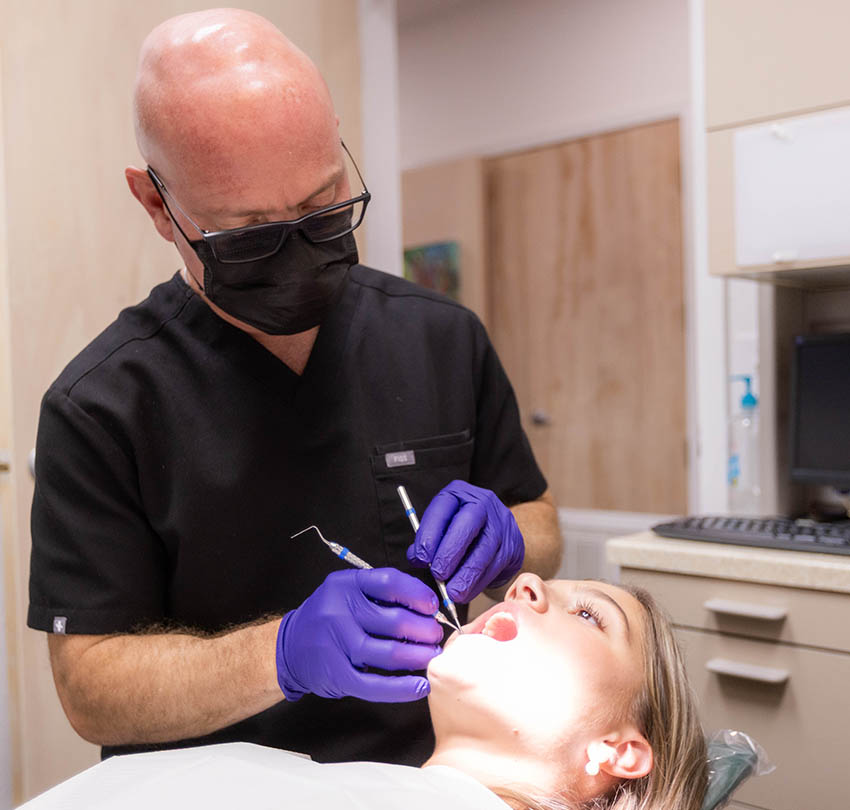
PRF therapy (Platelet-Rich Fibrin) is a regenerative treatment that uses your own blood to speed healing after dental surgery. A small blood sample is drawn and processed in a centrifuge to concentrate platelets, fibrin, and growth factors. This creates a natural gel-like membrane placed directly into surgical sites. Because PRF contains no additives or synthetic materials, it works in harmony with your body to reduce pain, swelling, and healing time after extractions, implants, and other oral surgeries.
At Biodental, we use PRF therapy as part of our biological approach to dentistry. Dr. Christopher M. Campus, DDS, uses this leading-edge technology to give your body the best possible environment for healing after dental procedures. Pensacola patients who choose PRF often appreciate how naturally it fits with our biological dentistry philosophy.
PRF works because it concentrates the very components your body already uses to repair tissue. When you experience an injury or surgical wound, platelets rush to the site, release growth factors, and form a fibrin scaffold that supports new tissue formation. PRF accelerates this natural sequence by giving your body a higher concentration of those same elements right where they’re needed.
The fibrin matrix acts like an internal bandage. It protects the wound, holds growth factors in place, and slowly releases healing signals over time. For patients having extractions or implants, this means the body doesn’t have to recruit healing resources from a distance, they’re already concentrated at the surgical site.
PRF also plays a role in reducing infection risk. The white blood cells preserved in the fibrin matrix offer natural antimicrobial support, which can be especially helpful for patients prone to slow healing. At our Pensacola practice, we’ve found PRF particularly valuable for complex cases where standard recovery may be unpredictable.
Creating PRF takes about 12-15 minutes right in the dental chair. The process is straightforward and uses only what your body already produces. Each step has been refined since the original protocol was developed in the early 2000s, and our team follows the same evidence-based sequence used in biological dental practices around the country.
Your dental team draws 10-60ml of blood (similar to a routine lab test) into sterile glass tubes. The amount depends on your specific procedure. Larger surgeries involving multiple sites or bone grafting typically require more tubes, while a single extraction may need only one. The draw is performed by trained clinical staff using standard phlebotomy technique.
The tubes spin in a specialized centrifuge. This separates your blood into distinct layers based on density. No chemicals or anticoagulants touch your sample. The spin speed and duration are calibrated to produce the ideal fibrin consistency for dental applications. This pure preparation method is part of what makes PRF a true autologous treatment.
The middle layer, a golden, gel-like substance, contains concentrated platelets, white blood cells, and fibrin proteins. Your dental team carefully removes this layer using sterile instruments. Depending on the application, the fibrin can be used as a membrane, compressed into a plug, or mixed with bone graft material.
The PRF membrane or plug goes directly into your extraction socket, implant site, or surgical wound. It acts like a protective bandage from the inside. Your dentist may shape the membrane to fit the surgical site precisely, then secure it with sutures if needed.
Over the next 7-14 days, the fibrin matrix slowly releases growth factors including PDGF, TGF-β, VEGF, and IGF. These proteins signal your cells to regenerate tissue and bone more efficiently than they would on their own. Each growth factor plays a different role, some signal new blood vessel formation, others stimulate bone-building cells, and still others recruit the immune cells that clear debris from the wound.
The slow release is what makes PRF different from older methods. Your body receives a steady supply of healing signals instead of one quick burst. This sustained delivery aligns with how natural healing actually unfolds across days and weeks.
PRF therapy offers real advantages over traditional healing methods. Here’s what you can expect.
Soft tissue typically heals more quickly with PRF support. The concentrated growth factors stimulate cellular activity at the wound edges, helping the gum tissue knit back together. Pensacola patients having extractions often notice the surgical site looks closed and comfortable sooner than expected. Faster closure also means less time with an open wound vulnerable to food debris and bacteria.
Yes. The fibrin plug helps stabilize the blood clot in extraction sites, which is the primary defense against dry socket. By providing a structured scaffold inside the socket, PRF reduces the chance of clot dislodgement during normal eating and speaking activities in the days after surgery.
Several additional advantages make PRF a valuable adjunct to dental surgery:
These benefits matter most for procedures like wisdom tooth removal, dental implant placement, and bone grafting. When your body heals faster, you get back to normal eating and activities sooner. Our Pensacola team frequently recommends PRF for patients planning multiple implants or extensive grafting work, where every advantage in healing speed and quality counts.
The biological dentistry approach at Biodental favors treatments that work with your body’s natural processes. PRF fits with this philosophy.
| Feature | PRF | PRP | Traditional Healing |
|---|---|---|---|
| Additives Required | None | Anticoagulants needed | N/A |
| Growth Factor Release | Gradual (7-14 days) | Rapid burst | Baseline only |
| White Blood Cells | Yes (antimicrobial benefit) | Minimal | Natural levels |
| Form | Solid fibrin membrane | Liquid | N/A |
| Preparation Time | 12-15 minutes | 30+ minutes | None |
| Cost | Moderate | Higher | None |
| Scaffold Function | Yes | No | None |
PRF is a step forward in regenerative dentistry. Dr. Joseph Choukroun developed this technique in 2001 specifically to improve on earlier PRP methods.
The key differences come down to simplicity and effectiveness. PRF preparation happens faster, costs less, and produces a usable membrane that your dentist can place precisely where healing support is needed most.
Traditional healing relies entirely on your body’s baseline response. For healthy patients with simple procedures, this works fine. For complex surgeries, implants, or patients with healing challenges, PRF gives your body a significant boost.
PRF therapy typically adds $200-$600 per site when combined with a dental procedure, with pricing influenced by procedure complexity, bundling practices, and insurance coverage. Several factors influence the final cost for each patient. Understanding these variables helps you plan and compare options accurately.
More extensive surgeries may require multiple PRF preparations. A single extraction might need one tube, while full-arch implant placement could require several. The number of surgical sites, the volume of bone graft material, and whether membranes need to cover larger areas all factor into how much PRF is prepared.
Some practices include PRF in their implant or extraction fees. Others list it as an add-on service. Ask your dental team how they structure pricing. Bundled estimates can make it easier to compare overall treatment costs between providers, while itemized pricing offers more transparency about each component.
Most dental insurance plans don’t cover PRF therapy since it’s considered an adjunctive treatment. Faster healing often means fewer follow-up costs, which can offset the upfront expense. Some flexible spending or health savings accounts may apply, depending on your plan rules.
Consider what complications cost, both in dollars and discomfort. Dry socket treatment, implant failures, and extended recovery time add up quickly. PRF helps prevent these issues, and the value of avoiding a second surgical visit is hard to overstate.
At Biodental, we offer multiple payment plans and financing options to make treatments like PRF accessible. Our membership club provides extra savings for patients without traditional insurance.
PRF therapy benefits a wide range of dental surgery patients. You may be an excellent candidate if you’re having:
Patients with certain health conditions may benefit even more from PRF support. If you have diabetes (well-controlled), are in smoking cessation, or tend to heal slowly, the concentrated growth factors can produce a noticeable improvement in healing.
Dr. Christopher M. Campus, DDS, evaluates each Pensacola patient individually to determine if PRF therapy fits your treatment plan. During your consultation, you’ll discuss your health history and surgical goals to make the best decision together.
Yes. PRF uses only your own blood with no synthetic additives, chemicals, or donor materials. This makes allergic reactions or rejection impossible. The technique has been used safely in dentistry since the early 2000s and is a standard offering in many oral surgery and biological dental practices.
The entire process takes about 12-15 minutes from blood draw to application. Your dental team prepares PRF chairside while you’re comfortable in the treatment room. This adds minimal time to your overall procedure.
The only discomfort is a standard blood draw from your arm, similar to what you’d experience at a routine lab visit. Many patients say they barely notice it. The PRF application itself causes no added soreness since you’re already anesthetized for your dental procedure.
The fibrin matrix releases growth factors over 7-14 days. The healing benefits extend for weeks as your tissue and bone regenerate. Most patients notice improved comfort and healing speed during the first week after surgery.
Absolutely. Dentists commonly mix PRF with bone graft material before placement. The growth factors help the graft integrate with your existing bone more effectively. This combination is particularly valuable for dental implant preparation, which Dr. Campus often performs for Pensacola patients planning full restorations.
PRF is classified as an autologous biologic, meaning it comes from your own body. The FDA does not “approve” autologous preparations the same way it approves drugs or devices. PRF is, however, used routinely in dental and medical practices throughout the United States.
Curious whether PRF therapy could support your dental surgery healing? At Biodental, Dr. Christopher M. Campus combines biological dentistry principles with leading-edge technology like PRF to help Pensacola patients heal faster and more comfortably. Reach out when you’re ready to learn more about your treatment options.