



Xiaoli H
The tech for cleaning is amazing. I have dry mouth and sensitive teeth. The tech made the process comfortable and easy. No pain at all.
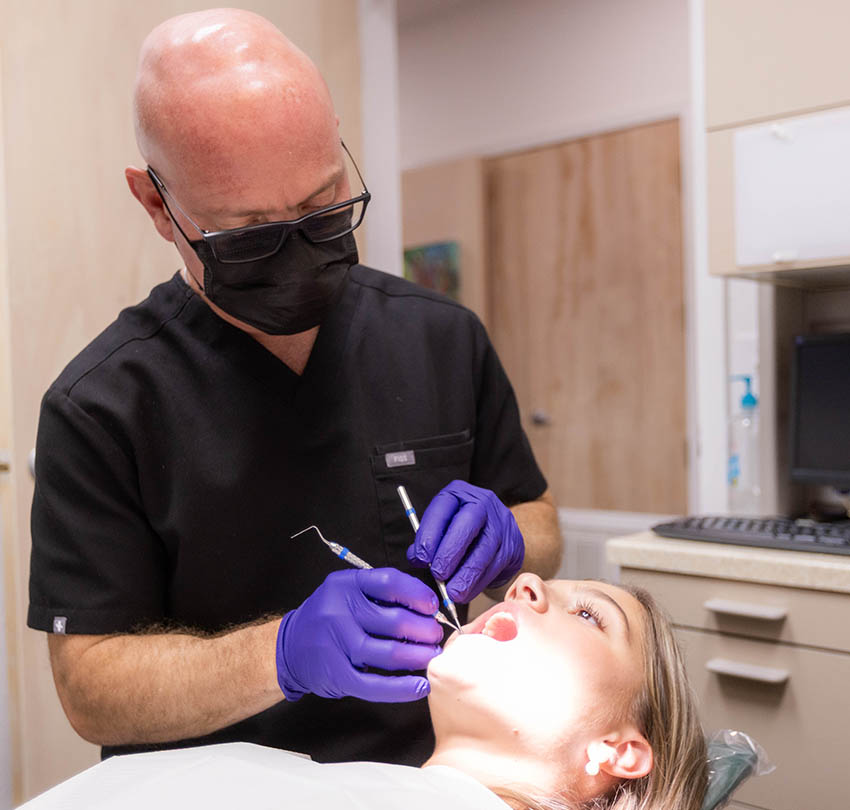
The SMART Protocol (Safe Mercury Amalgam Removal Technique) is a set of strict safety standards developed by the International Academy of Oral Medicine and Toxicology (IAOMT) for removing mercury amalgam fillings. It uses rubber dams, high-volume suction, air filtration, and protective barriers to reduce mercury vapor exposure for patients, dental teams, and the environment.
Dental amalgam fillings, often called “silver fillings,” contain roughly 50% elemental mercury by weight. When these fillings are disturbed during routine removal, they can release mercury vapor and fine particles into the mouth and surrounding air. The SMART Protocol was created as a global health initiative to address that concern with practical, evidence-informed safety steps. The IAOMT first published its formal SMART recommendations to give practices a consistent, documented standard to follow.
At Biodental, our team follows SMART guidelines because we practice biological dentistry, and how a filling is removed matters just as much as what replaces it. Dr. Campus and the team treat safe removal as a core part of that approach. True health begins in your mouth, and safe removal is a key part of protecting your whole-body health.
SMART amalgam removal is a layered safety process that contains mercury vapor and particles at every stage, from room preparation and protective barriers through rubber dam isolation, cool water irrigation, careful sectioning, dedicated vapor suction, and thorough cleanup before a new restoration is placed.
Each layer of protection works together, from the moment you sit down until the new restoration is placed. Here’s what a typical visit looks like when your biological dentist follows IAOMT SMART standards. Dr. Campus follows this same sequence with every amalgam he removes.
Every step keeps mercury contained in one place, so it can be captured, filtered, and disposed of properly.
Choosing SMART removal isn’t only about the filling itself. It’s about how the process affects your body, the dental team, and the world outside the office.
For many patients, safe removal is the first step in a broader plan to look, feel, and live better. It’s a small change that can support your whole-body health for years to come.
Not every dental office follows SMART standards. Standard amalgam removal often uses basic suction and a rubber dam if requested, but it typically doesn’t include dedicated mercury vapor evacuators, HEPA air filtration, or a supplemental air source for the patient. The core difference is containment.
SMART certification through the IAOMT requires specific training, equipment, and adherence to published safety standards. Here’s a side-by-side look at how the two approaches compare.
| Safety Feature | Standard Removal | SMART Protocol |
|---|---|---|
| Rubber dam isolation | Sometimes | Always (non-latex) |
| High-volume suction | Yes | Yes, plus dedicated mercury vapor evacuator |
| Room air filtration | Not typical | HEPA + activated carbon |
| Patient air supply | Not provided | Nasal oxygen or filtered air |
| Full-body barriers | Rarely | Standard for patient and staff |
| Cool water irrigation | Sometimes | Always, at high volume |
| Filling sectioned in chunks | Varies | Yes, standard technique |
| IAOMT training required | No | Yes |
If you’re removing amalgam specifically for health or biocompatibility reasons, the protocol you choose matters. Standard removal may leave you exposed to the very mercury vapor you’re trying to avoid.
SMART amalgam removal cost depends on several factors, including how many fillings you have, their size and location, the replacement material you choose, and the extra protective equipment and time each visit requires. Most patients also need new restorations after removal, and that portion is priced separately from the safety protocol itself.
Here are the main variables that influence your total cost:
During your consultation at Biodental, we’ll walk through a written treatment plan so you can see exactly what’s included. We also offer multiple payment plans, financing options, and a Membership Club to help make care more predictable for the patients we serve.
Most adults who still have silver fillings are candidates for SMART removal. That said, timing and treatment order depend on your health history, the condition of your existing fillings, and your goals for future dental work. The patients we care for at Biodental come to this decision from many different starting points.
You may be a good candidate if you:
A consultation is the best way to decide what’s right for you. We’ll review your fillings with digital imaging, discuss your health history, and help you understand which fillings need attention first. Some patients choose to replace all amalgams over a few visits, while others prioritize the ones showing wear or leakage. There’s no single right answer, only the plan that fits your body and your schedule.
Removal is safest when it follows the SMART Protocol. The layered approach, rubber dam, high-volume suction, mercury vapor evacuator, supplemental air, and HEPA filtration, keeps mercury contained rather than releasing it into your mouth or the room. Ask any biological dentist you’re considering whether they’re trained through the IAOMT and follow published SMART standards.
Plan on roughly 60 to 90 minutes per visit, depending on how many fillings are being replaced and the type of restoration used. Same-day ceramic crowns take longer than a single composite filling. Your biological dentist will give you a specific time estimate once your treatment plan is finalized.
No. Most patients space treatment across several visits. This is more comfortable, keeps chair time reasonable, and lets your biological dentist prioritize the fillings that show the most wear, cracking, or leakage. Your care plan is built around your body, your budget, and your calendar.
Options include tooth-colored composite fillings, ceramic inlays and onlays, and full ceramic crowns. All are metal-free and designed to work in harmony with your body. The best choice depends on how much healthy tooth structure remains and where the tooth sits in your bite.
Insurance often covers a portion of the replacement filling or crown, but it typically does not cover the added cost of the SMART safety protocol itself. Our team will verify your benefits, submit claims on your behalf, and walk you through any out-of-pocket costs before treatment begins.
Want to learn more about safe mercury amalgam removal? The team at Biodental, led by Dr. Christopher M. Campus, DDS, can help you understand your options and decide whether SMART amalgam removal is right for you. Learn more about our approach to biological dentistry and how safe removal fits into your care by reaching out to our office.